How CS2 Case Odds Really Work
CS2 case odds explained: standard rarity rates, StatTrak chances, opening costs and EV, plus why souvenir packages and third-party cases need different math.
Valve published odds (standard cases)
Standard CS2 weapon cases use the familiar rarity probabilities published for Counter-Strike case openings through the game's Chinese operation. These percentages describe the rarity tier of the result, not the chance of receiving a particular skin, pattern, or market value. The same headline rarity distribution does not make every container economically equivalent.
- Mil-Spec: 79.92%.
- Restricted: 15.98%.
- Classified: 3.20%.
- Covert: 0.64%.
- Rare Special: 0.26%.
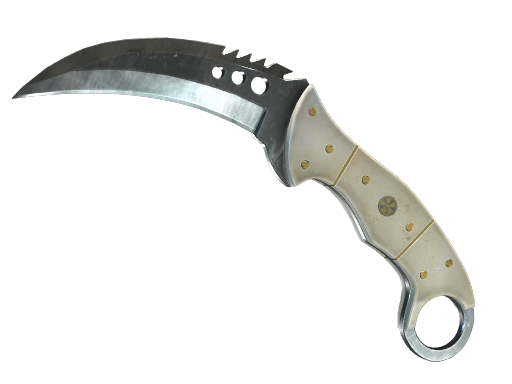
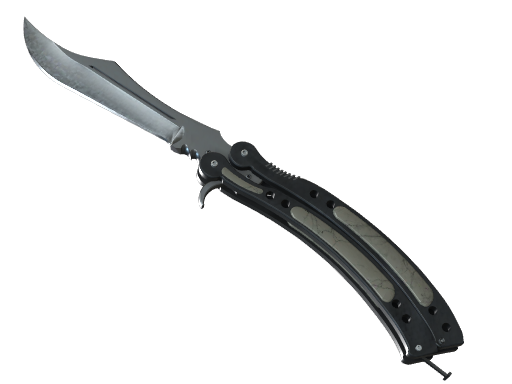
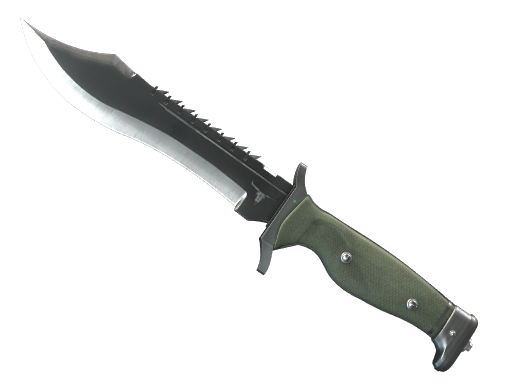
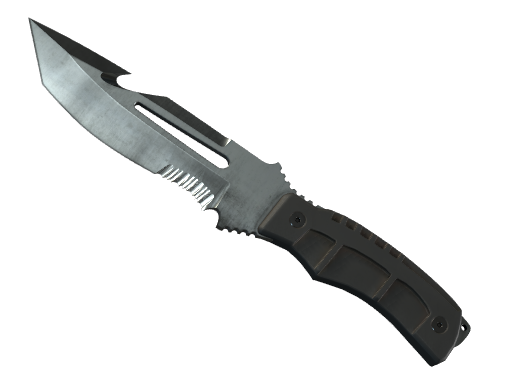
These published figures are rounded. Rare Special means the case's designated special-item pool: depending on the case, that can contain knives or gloves. Calling 0.26% a universal knife chance is therefore misleading. First check what the container can actually award. The Kilowatt Case, for example, has a knife pool; a glove case does not secretly offer the same knife outcomes.
A rarity probability is only the first layer of a specific-item calculation. A target finish must also be selected from its eligible pool, and the desired condition or pattern narrows the outcome further. Do not assign the entire Covert probability to one red skin when the case contains multiple Covert outcomes.
Past openings do not make the next result “due.” For a 0.26% event, the chance of seeing at least one result in 100 independent openings is approximately 22.9%, calculated as one minus 0.9974 raised to the hundredth power. It is not 26%, and it certainly is not a guarantee. The reciprocal, roughly 385 openings, is an average waiting time across repeated trials, not a reward threshold.
StatTrak is a second roll
For eligible case drops, StatTrak is commonly described as a second roll with an approximately 10% chance. This is a useful way to model the additional condition on an outcome: first consider the underlying drop, then apply the StatTrak probability. It should not be read as a claim about the internal order of the game's software.
For a standard case whose Rare Special pool consists of StatTrak-eligible knives, the combined probability is approximately:
0.26% × 10% = 0.026%.
That is about one StatTrak knife per 3,846 openings on average under this model. It is not one particular knife finish, and it does not guarantee a StatTrak knife after spending enough. Repeated attempts can produce none, one, or several, with spending continuing regardless of the result.
Eligibility matters. Gloves do not have StatTrak versions, so multiplying a glove case's Rare Special chance by 10% does not create a possible StatTrak glove outcome. Souvenir items are another distinct category, not ordinary case drops with this multiplier attached. Always identify the container and eligible item type before using the shorthand.
EV is not “you will profit”
Expected value, or EV, is a probability-weighted average of possible outcomes. For an opening, gross item EV is the sum of each possible item's value multiplied by its probability. Net expected return subtracts the opening cost and any selling costs that were not already included in those item values.
The cost includes both the case and the key. A case already in your inventory is not economically free: opening it gives up the opportunity to sell or keep it. Use the actual key price applicable to your account and currency rather than assuming every checkout matches a dollar estimate.
Most case-plus-key openings have expected value below their opening cost. There is no reliable promise of positive EV here. A calculator showing an attractive figure may be using stale quotes, unrealistic sale prices, missing outcomes, or incomplete wear assumptions. A high advertised listing is not necessarily what someone will pay after fees.
Consider a purely hypothetical opening costing $5 with an estimated gross item EV of $3. That describes a $2 expected shortfall before additional selling costs; it does not mean every opening returns $3. Most individual results can sit far below the average because rare, expensive drops pull that average upward.
Compare like-for-like values: cash-market prices and Steam Wallet prices are not interchangeable proceeds. Check when prices were updated, how unsold or unavailable items are valued, and whether the calculation separates wear and StatTrak variants. Use buy vs open to frame the purchase decision, not to turn an estimated average into a profit forecast.
Active case vs souvenir vs third-party sites
An active case refers to its availability in the game's current distribution system, not a special set of opening odds. Changes in supply can affect case prices without improving the standard rarity probabilities. Conversely, an older or discontinued case may cost more simply because its supply and contents differ, not because its openings receive a luck bonus.
Souvenir packages are not standard keyed weapon cases. They contain collection-specific Souvenir items, open without a case key, and do not provide the standard Rare Special knife-or-glove roll. Their eligible rarity tiers and contents require a separate model. Applying the five standard-case percentages to a souvenir package produces the wrong calculation.
Third-party opening sites are also separate products. Their custom cases, displayed item probabilities, balances, and withdrawal rules are not Valve's standard case system. A familiar skin image or spinning animation does not establish identical odds or equivalent ownership of a withdrawable item.
For those services, go to case-opening sites and read the relevant terms and review rather than reusing this math. The Hellcase review is one such reference, not evidence that its cases share Valve probabilities. Review eligibility, published probabilities, and withdrawal conditions separately; neither this guide nor a review guarantees outcomes.
What to open on Dust2pedia instead of this page
Open the cases database to compare actual containers and check their contents before calculating anything. Use a specific case page to distinguish the normal weapon pool from its Rare Special pool. This prevents a common mistake: estimating the chance of a target that cannot appear in that case at all.
If your goal is one particular skin, start with its direct purchase price and the buy-versus-open comparison. Bookmark best case for a skin for future use, but it is currently a coming-soon page, not a working recommendation engine.
Keep the decision practical: identify the eligible outcomes, include every cost, and treat any opening budget as money you can lose. Probability explains possible results; it does not make opening the dependable way to obtain your target.